
Understanding Your Child’s Prescription
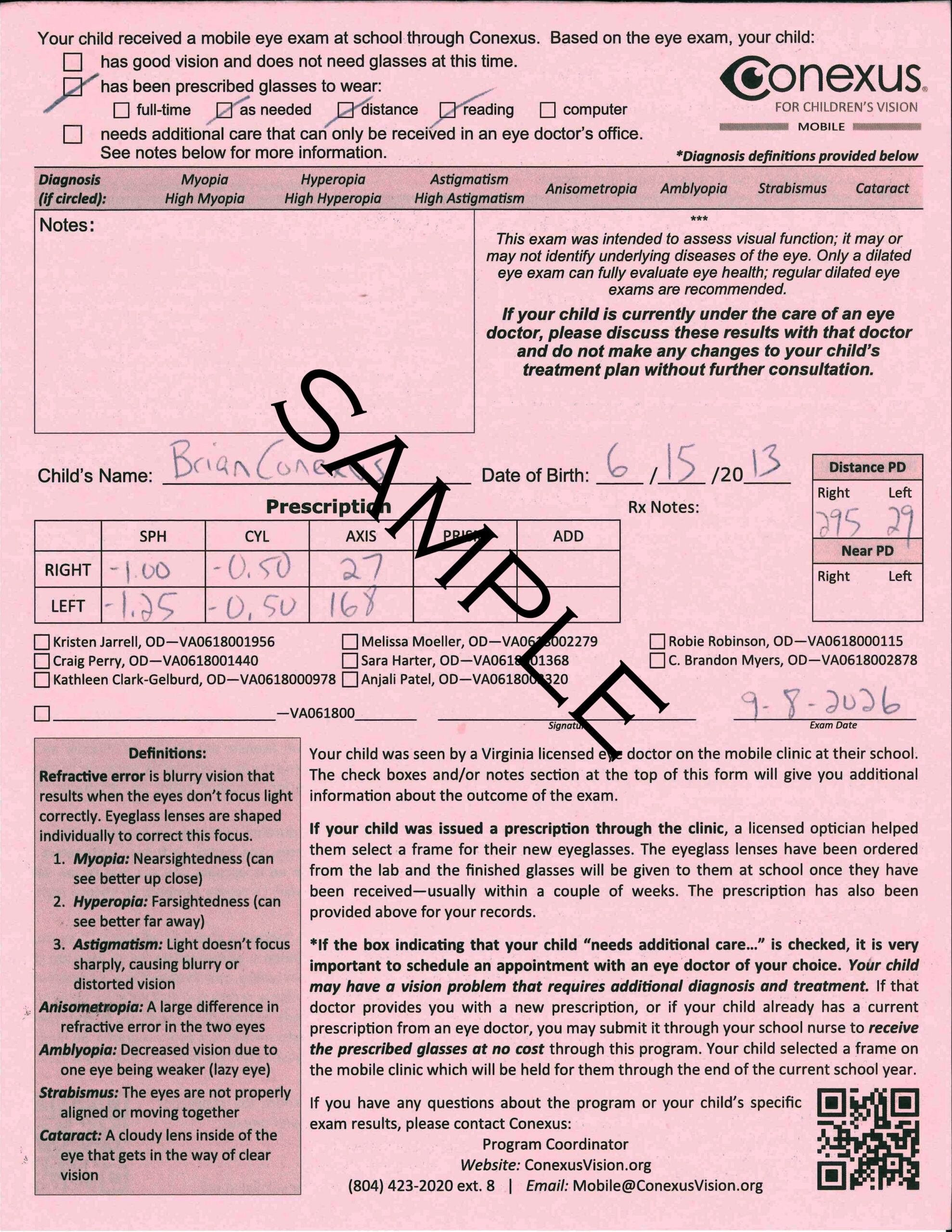
Refractive error is the most common vision problem of childhood. Blurry vision can be caused by myopia, hyperopia, and/or astigmatism.
Myopia is better known as nearsightedness; can see better up close.
Hyperopia is better known as farsightedness; can see better far away.
Astigmatism light doesn’t focus sharply, causing blurry or distorted vision due to the shape of the cornea. Some children have some degree of astigmatism, measured as “cylinder”.
Anisometropia a large difference in refractive error in the two eyes. A significant difference may indicate the potential for amblyopia, or “lazy eye”.
Amblyopia is poor vision in an otherwise normal appearing eye that occurs when the brain does not fully recognize sight from that eye. Common causes are strabismus and refractive error. Early treatment is the key to preventing permanent vision loss from amblyopia.
Strabismus: Misalignment of the eyes in any direction, including the inability to direct two eyes in the same direction.
Cataract: A cloudy lens inside of the eye that gets in the way of clear vision. Cataracts in children can be congenital or caused by a traumatic injury to the eye.